
Healthcare leaders and innovators are racing to understand how computer vision in healthcare is moving from experimental pilots to real-world clinical impact. If you’re here, you’re likely looking for clear, practical insight into how this technology works, where it’s delivering measurable value, and what it means for patient care, diagnostics, and operational efficiency.
This article breaks down the most important applications—from medical imaging analysis and surgical assistance to patient monitoring and workflow automation—while cutting through the hype. You’ll learn how computer vision systems are trained, how they integrate with existing devices and hospital infrastructure, and what challenges organizations must solve around data privacy, accuracy, and compliance.
Our insights are grounded in current AI research, real-world deployment case studies, and ongoing advancements in machine learning and device integration. The goal is simple: give you a clear, trustworthy understanding of where computer vision is transforming healthcare today—and where it’s headed next.
From radiology suites in Boston to NHS trusts in Manchester, imaging backlogs are stretching clinicians thin. Every day, PACS servers ingest thousands of X-rays, CT scans, and MRIs, each demanding careful review. However, fatigue and time pressure can blur subtle anomalies. That’s where computer vision in healthcare steps in as a second set of eyes. By training convolutional neural networks to flag microcalcifications, tiny pulmonary nodules, or early ischemic changes, hospitals accelerate triage and reduce diagnostic drift. Consequently, care pathways move faster, multidisciplinary teams collaborate sooner, and patients receive targeted treatment before conditions escalate. Turnaround times drop across departments significantly.
Core Applications in Diagnostic Image Analysis
Radiology Automation
AI-driven radiology tools now flag anomalies in X-rays, CT scans, and MRIs with accuracy that rivals—or in narrow tasks, exceeds—human specialists. A 2020 study in Nature reported an AI system matching radiologists in breast cancer detection on mammograms. Similar models identify pulmonary nodules in chest CTs, detect subtle brain tumors in MRI scans, and highlight hairline bone fractures often missed in busy emergency settings. These systems rely on deep learning—neural networks trained on millions of labeled images—to recognize patterns invisible to the human eye (yes, sometimes it’s like giving radiology superhero vision).
Digital Pathology Enhancement
Whole-slide imaging converts tissue samples into ultra-high-resolution digital slides. Algorithms then automate cell counting, detect mitotic figures (cells actively dividing), and grade cancer severity. Research published in The Lancet Oncology showed AI-assisted pathology improving diagnostic consistency for Gleason scoring in prostate cancer. By reducing manual review time, labs accelerate turnaround while maintaining accuracy—critical when treatment decisions hinge on days, not weeks.
Oncology and Tumor Detection
Image segmentation—where models precisely outline tumors—provides volumetric measurements over time. Instead of subjective visual comparisons, oncologists receive objective growth metrics. In lung cancer trials, AI-based volumetric analysis improved response assessment consistency by over 20% compared to manual reads (Radiology, 2019). Objective measurement transforms follow-up from estimation to evidence.
Ophthalmology and Retinal Scans
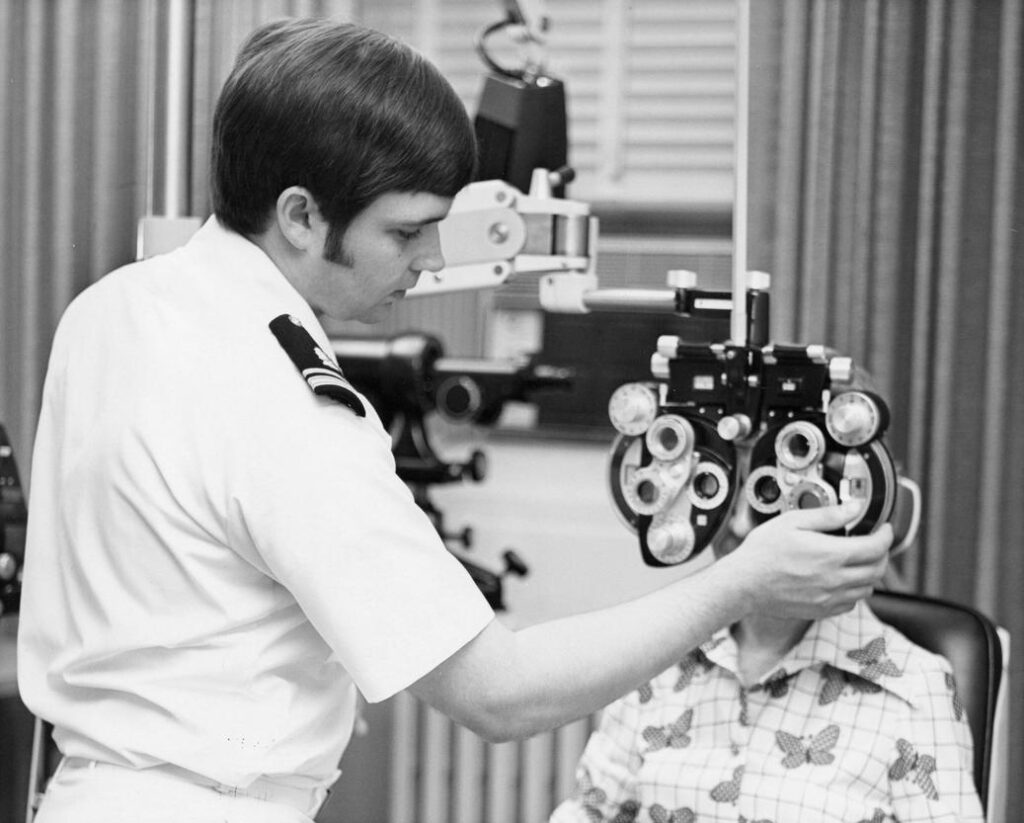
Screening tools powered by computer vision in healthcare analyze retinal fundus images to detect diabetic retinopathy and age-related macular degeneration. The FDA-approved IDx-DR system demonstrated 87% sensitivity in clinical validation studies, enabling early intervention and reducing preventable blindness.
From Diagnosis to Treatment: Computer Vision in Active Patient Care
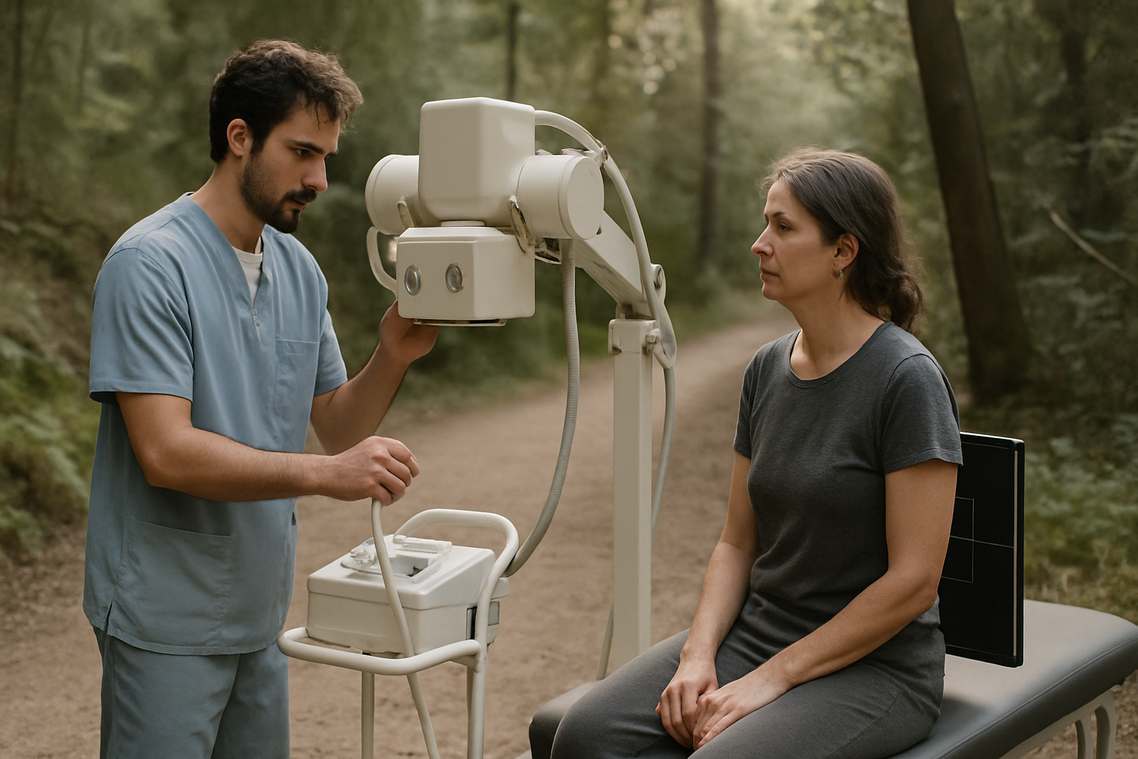
Healthcare is no longer just about clipboards and polite nods. It’s increasingly powered by cameras, algorithms, and systems that don’t blink (literally).
-
Surgical Assistance and Navigation
In modern operating rooms, AI tracks surgical instruments in real time, overlays 3D anatomical models onto live video feeds, and flags critical structures like nerves and blood vessels. Think of it as GPS for surgeons—except instead of “recalculating,” it’s preventing a wrong turn near an artery. Studies show image-guided surgery can improve precision and reduce complications (National Institutes of Health). That’s not just smart—that’s lifesaving. -
Patient Monitoring and Safety
Ambient cameras and sensors monitor patients for falls, analyze posture during rehab, and even estimate heart and respiratory rates without physical contact. This matters because hospital falls affect up to 1 million patients annually in the U.S. (Agency for Healthcare Research and Quality). Instead of strapping on more wires, patients can recover comfortably while AI keeps watch—like a very polite, very vigilant guardian. -
Personalized Treatment Planning
By analyzing pre-treatment scans, computer vision in healthcare can predict how a tumor might respond to chemotherapy or radiation. Research in radiomics shows imaging features correlate with treatment outcomes (Nature Reviews Clinical Oncology). Translation: fewer guesswork decisions, more tailored therapies. -
Automating Clinical Documentation
AI can transcribe and summarize consultations from video, capturing key details automatically. Doctors spend nearly two hours on paperwork for every hour of patient care (Annals of Internal Medicine). Let the machines handle the typing—clinicians have better things to do.
The Technology Powering Medical Vision: A Look Under the Hood
At the core of modern medical imaging AI are Convolutional Neural Networks (CNNs)—a type of deep learning model built to detect patterns in images. Think of them as layered filters that scan for edges, shapes, and textures, not unlike the human visual cortex (just with more math and fewer coffee breaks). In computer vision in healthcare, CNNs help flag tumors, fractures, or anomalies that might escape a tired eye. Still, while results are promising, experts continue debating how well these systems generalize across hospitals and patient populations.
Just as important is the data. Most models train on DICOM (Digital Imaging and Communications in Medicine) files annotated by radiologists. Annotation means experts label specific findings—like circling a lung nodule—so the model learns what “abnormal” looks like. However, even small labeling inconsistencies can ripple into performance gaps. I’ll admit: we don’t always know how dataset bias affects rare conditions.
Finally, integration matters. AI must plug into PACS (Picture Archiving and Communication Systems) and EHRs (Electronic Health Records) seamlessly. Otherwise, it’s just a flashy demo. For context on workflow evolution, see how generative ai is changing content creation workflows. After all, technology only works when it fits naturally into real-world routines.
Regulatory and ethical concerns remain front and center. Before AI tools touch patients, they require rigorous clinical validation and approval from agencies like the FDA to confirm safety and reliability. While some argue regulation slows innovation, oversight builds trust, reduces liability, and accelerates adoption.
Data privacy and security are equally critical. Compliance with HIPAA protects sensitive records used in training and inference, safeguarding patients and providers from breaches.
Then there’s the “black box” problem. If clinicians can’t explain a model’s reasoning, confidence drops. Improving interpretability in computer vision in healthcare empowers doctors to act decisively—unlocking safer, faster, more accountable care.
A Smarter Clinical Standard
The future of care is collaborative. The future of care is collaborative. AI-assisted practice pairs algorithmic precision with human judgment. In an A vs B comparison, traditional workflows bury clinicians in scans and charts, while intelligent systems surface the critical anomalies in seconds. computer vision in healthcare flags patterns a tired eye might miss, yet physicians decide what they mean. Skeptics worry automation erodes bedside skills. But augmentation reduces data overload, freeing doctors for complex decisions and real conversations (the part no machine can replicate). Integration is shifting from optional upgrade to essential infrastructure for safer, faster, more personalized care. Industry-wide momentum.
You came here to understand how computer vision in healthcare is transforming diagnostics, streamlining workflows, and improving patient outcomes. Now you’ve seen how real-time imaging analysis, AI-assisted detection, and smart device integration are reshaping what’s possible inside clinics, labs, and hospitals.
The challenge has never been a lack of data. It’s been turning that data into faster decisions, fewer errors, and better care. That’s the pain point. When systems don’t communicate or insights arrive too late, efficiency drops and patient trust suffers.
The opportunity is clear: apply intelligent vision systems that reduce manual review, enhance diagnostic precision, and integrate seamlessly with existing devices. When implemented correctly, these solutions don’t just support clinicians—they amplify their expertise.
Put Vision to Work Where It Matters Most
If you’re ready to eliminate bottlenecks, reduce diagnostic delays, and unlock actionable insights from medical imaging, now is the time to act. Leverage proven, studio-grade AI integrations designed to solve real clinical inefficiencies. Join the innovators already using advanced vision systems to stay ahead—explore implementation strategies today and start transforming outcomes with confidence.

 Claranevals Smith writes the kind of studio-grade tech solutions content that people actually send to each other. Not because it's flashy or controversial, but because it's the sort of thing where you read it and immediately think of three people who need to see it. Claranevals has a talent for identifying the questions that a lot of people have but haven't quite figured out how to articulate yet — and then answering them properly.
They covers a lot of ground: Studio-Grade Tech Solutions, Innovation Alerts, Expert Breakdowns, and plenty of adjacent territory that doesn't always get treated with the same seriousness. The consistency across all of it is a certain kind of respect for the reader. Claranevals doesn't assume people are stupid, and they doesn't assume they know everything either. They writes for someone who is genuinely trying to figure something out — because that's usually who's actually reading. That assumption shapes everything from how they structures an explanation to how much background they includes before getting to the point.
Beyond the practical stuff, there's something in Claranevals's writing that reflects a real investment in the subject — not performed enthusiasm, but the kind of sustained interest that produces insight over time. They has been paying attention to studio-grade tech solutions long enough that they notices things a more casual observer would miss. That depth shows up in the work in ways that are hard to fake.
Claranevals Smith writes the kind of studio-grade tech solutions content that people actually send to each other. Not because it's flashy or controversial, but because it's the sort of thing where you read it and immediately think of three people who need to see it. Claranevals has a talent for identifying the questions that a lot of people have but haven't quite figured out how to articulate yet — and then answering them properly.
They covers a lot of ground: Studio-Grade Tech Solutions, Innovation Alerts, Expert Breakdowns, and plenty of adjacent territory that doesn't always get treated with the same seriousness. The consistency across all of it is a certain kind of respect for the reader. Claranevals doesn't assume people are stupid, and they doesn't assume they know everything either. They writes for someone who is genuinely trying to figure something out — because that's usually who's actually reading. That assumption shapes everything from how they structures an explanation to how much background they includes before getting to the point.
Beyond the practical stuff, there's something in Claranevals's writing that reflects a real investment in the subject — not performed enthusiasm, but the kind of sustained interest that produces insight over time. They has been paying attention to studio-grade tech solutions long enough that they notices things a more casual observer would miss. That depth shows up in the work in ways that are hard to fake.