

If you’re searching for clear, practical guidance on acoustic treatment basics, you likely want to improve sound quality in a studio, home office, or creative space—without wasting money on the wrong materials. Poor room acoustics can ruin recordings, distort mixes, and make even high-end gear underperform. Understanding how sound behaves in a room is the first step toward fixing echo, flutter, and low-frequency buildup.
This article breaks down what actually matters: absorption vs. diffusion, panel placement, bass traps, and how room size affects results. Instead of vague advice, you’ll get straightforward explanations grounded in real-world studio testing and established acoustic principles used in professional environments. We’ve analyzed proven room treatment methods and practical setup strategies to ensure the guidance is accurate and effective.
By the end, you’ll know exactly how to approach acoustic treatment with confidence—and how to make smarter decisions that dramatically improve your sound quality.
Your Guide to a Perfect-Sounding Space
Uncontrolled sound travels as vibrating energy waves that reflect, absorb, or transmit through materials. Consequently, fixing noise starts with understanding intent. Soundproofing blocks sound transmission using mass-loaded vinyl, dense drywall, or decoupled walls (adding mass and isolation reduces vibration transfer). In contrast, acoustic treatment basics focus on managing reflections with foam panels, bass traps, and diffusers to improve clarity.
Some argue foam “soundproofs” a room. However, foam absorbs echo; it doesn’t stop outside noise (a common and costly mix-up).
| Solution | Key Feature | Primary Benefit |
|---|---|---|
| Soundproofing | Dense barriers |
Blocks external noise |
| Acoustic Treatment | Absorptive/diffusive panels | Reduces echo, sharpens audio |
Soundproofing vs. Acoustic Treatment: Understanding the Core Difference
Walk into a room where the bass from next door rattles your ribs and the air itself seems to hum. That’s when people say, “I need acoustic panels.” Not always.
Soundproofing (Isolation) means stopping sound from entering or leaving a space. Think of building a submarine: thick walls, sealed hatches, no leaks. In technical terms, it relies on:
- Mass (heavy, dense materials)
- Damping (dissipating vibration between layers)
- Decoupling (separating structures to stop vibrations from traveling)
- Sealing (closing all air gaps)
If you can feel the kick drum through the floorboards, you’re dealing with transmission.
Acoustic Treatment (Control) shapes how sound behaves inside the room. Imagine clapping and hearing a sharp flutter echo bounce like a ping-pong ball. Treatment smooths those reflections so your voice sounds warm instead of metallic.
Absorption (soaking up sound energy to reduce echo)
Diffusion (scattering sound energy to create a spacious feel), and Bass Trapping (addressing low-frequency buildup).
Some argue foam panels “soundproof” a room. They don’t. Foam may tame reflections, but it won’t stop your neighbor’s dog from joining your podcast (uninvited co-host energy).
Misdiagnosing the issue is costly. First ask: do you need to block sound—or control it?
Principle 1: Building a Barrier with Mass and Decoupling
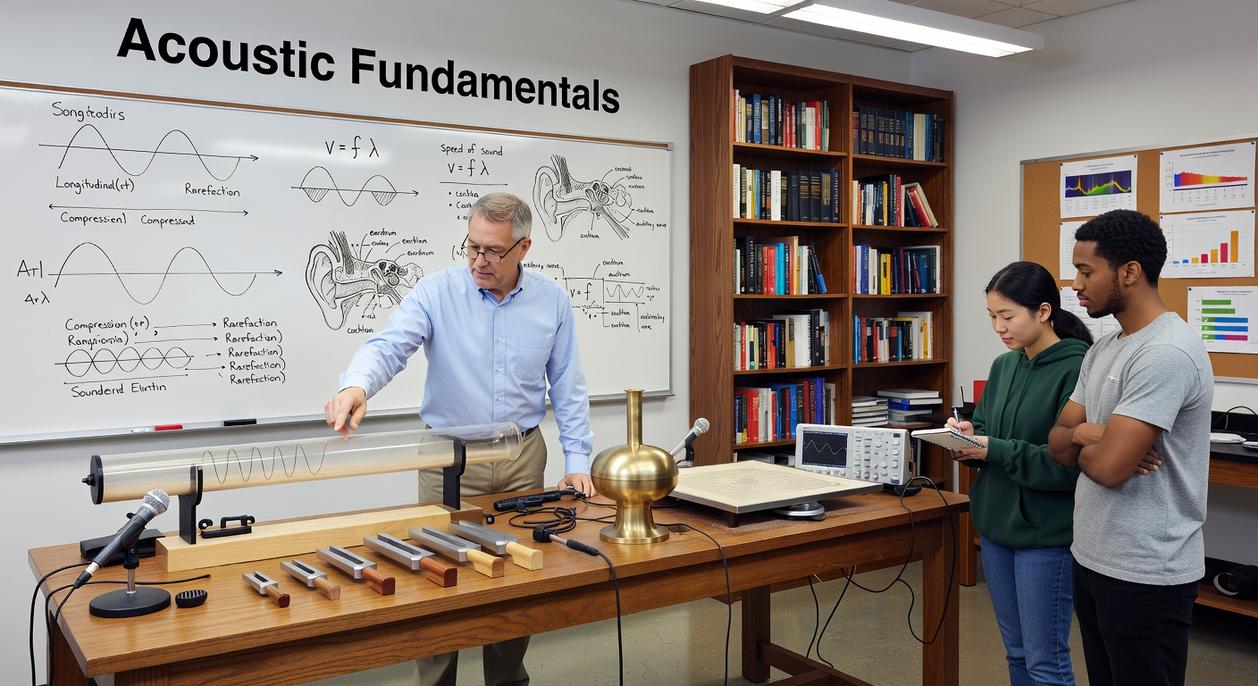
Sound is energy in motion. To stop it, you need mass—plain and simple. Thin drywall or hollow doors barely slow sound waves because they lack density. In contrast, heavier materials like double 5/8-inch drywall layers or mass-loaded vinyl (a dense, flexible membrane designed to add weight without bulk) reflect and absorb significantly more sound energy. According to the National Research Council, increasing wall mass directly improves Sound Transmission Class (STC) ratings, which measure how well a structure blocks airborne sound.
However, mass alone isn’t enough. That’s where decoupling comes in. Sound vibrations travel efficiently through connected framing. By separating structures—using double-stud walls, staggered studs, or resilient channels—you interrupt vibration paths. Think of it like cutting a bridge between two islands; without contact, energy struggles to cross.
To apply this effectively:
- Add dense material layers to increase mass.
- Mechanically separate wall assemblies.
- Seal every air gap with acoustic caulk.
Even a 1% opening can reduce isolation performance dramatically (U.S. DOE findings). Solid-core doors and sealed outlets are non-negotiable. While some argue acoustic panels alone solve noise issues, that confuses acoustic treatment basics with isolation. For studio setups running high performance workstations for creative professionals, combining mass, decoupling, and airtight sealing delivers measurable, professional-grade results.
Principle 2: Taming Reflections with Absorption and Diffusion
Before you add another plugin or upgrade your monitors, it helps to revisit acoustic treatment basics. Great sound starts with how your room handles reflections.
Understanding Absorption
Absorption is the process of converting sound energy into a tiny amount of heat. In simple terms, the sound wave goes in—and doesn’t come back out with the same strength. Porous materials like mineral wool and dense fiberglass excel here. Their fibrous structure traps air movement caused by sound waves, gradually dissipating the energy.
The benefit? Fewer harsh reflections interfering with what you hear. For example, untreated parallel walls can create flutter echo—that metallic “ping” you notice after a clap. Absorptive panels stop that ringing in its tracks (like noise-canceling headphones for your walls).
They also reduce reverberation time (RT60)—the time it takes for sound to decay by 60 dB. Lower RT60 means clearer dialogue, tighter mixes, and less “cavern effect.” Pro tip: target first reflection points before covering every wall.
Understanding Diffusion
Diffusion takes a different approach. Instead of removing energy, diffusers scatter sound in multiple directions. This breaks up strong reflections without making the room feel acoustically “dead.”
In practice, diffusers shine on rear walls in control rooms or in live recording spaces where you want openness and depth. Think of it as sonic light passing through a prism—energy remains, but it’s evenly distributed.
Some argue absorption alone is enough. However, over-absorbing can make a room feel unnaturally flat (like recording in a blanket fort). Balanced diffusion preserves liveliness while maintaining control—giving you clarity without sacrificing character.
Conquering Low Frequencies with Bass Trapping
Low frequencies are the bullies of any room. Because bass waves have long wavelengths (the physical distance between wave peaks), they don’t just fade away—they pile up. As a result, corners become pressure zones where “room modes” (resonant frequencies created by a room’s dimensions) exaggerate certain notes while canceling others. One bass note booms like a movie trailer explosion, the next vanishes. It’s frustrating.
In my opinion, ignoring bass control is the fastest way to sabotage an otherwise solid setup. Standard panels simply aren’t thick enough to tame these waves. Bass traps, on the other hand, are dense, deep absorbers built specifically for low-frequency energy. They’re not optional tweaks—they’re foundational.
So where should they go? Corners, always. More specifically, tri-corners and vertical wall junctions where pressure peaks. If you care about acoustic treatment basics, start there. Pro tip: treat all four vertical corners before tweaking anything else.
Applying the Principles: Your First Steps to a Better Sounding Room
Unmanaged sound—whether it’s traffic bleeding through the walls or slapback echo inside your room—compromises clarity. Ever recorded something that sounded perfect live, then harsh on playback? That’s your space talking back. So what’s the real issue: isolation or treatment?
Isolation uses mass and decoupling to block sound transfer. Treatment relies on absorption, diffusion, and bass trapping to control reflections. Think of it as acoustic treatment basics in action.
Now ask yourself: are you fighting a noisy neighbor, or taming flutter echo? Start there. Diagnose first—then build a plan that actually fits your room.
You set out to understand how to improve your sound environment and eliminate the distractions that ruin clarity and performance. Now you know how smart positioning, material choice, and acoustic treatment basics work together to transform any space into a controlled, professional-grade setup.
Poor acoustics aren’t just annoying—they cost you focus, accuracy, and creative momentum. Echo, flutter, and muddy low-end response can quietly sabotage your recordings, streams, or listening experience. The difference between average and studio-quality results often comes down to applying the right treatment in the right way.
With the right approach, you can turn even a challenging room into a precise, reliable space that supports your goals instead of fighting them.
Build a Space That Actually Sounds Right
If you’re tired of battling bad sound and second-guessing your mixes or recordings, it’s time to fix the room—not just the gear. Get expert-backed acoustic strategies, studio-grade tech solutions, and proven integration hacks trusted by creators who demand clarity and control. Start optimizing your setup today and experience the sound your space was meant to deliver.

 Claranevals Smith writes the kind of studio-grade tech solutions content that people actually send to each other. Not because it's flashy or controversial, but because it's the sort of thing where you read it and immediately think of three people who need to see it. Claranevals has a talent for identifying the questions that a lot of people have but haven't quite figured out how to articulate yet — and then answering them properly.
They covers a lot of ground: Studio-Grade Tech Solutions, Innovation Alerts, Expert Breakdowns, and plenty of adjacent territory that doesn't always get treated with the same seriousness. The consistency across all of it is a certain kind of respect for the reader. Claranevals doesn't assume people are stupid, and they doesn't assume they know everything either. They writes for someone who is genuinely trying to figure something out — because that's usually who's actually reading. That assumption shapes everything from how they structures an explanation to how much background they includes before getting to the point.
Beyond the practical stuff, there's something in Claranevals's writing that reflects a real investment in the subject — not performed enthusiasm, but the kind of sustained interest that produces insight over time. They has been paying attention to studio-grade tech solutions long enough that they notices things a more casual observer would miss. That depth shows up in the work in ways that are hard to fake.
Claranevals Smith writes the kind of studio-grade tech solutions content that people actually send to each other. Not because it's flashy or controversial, but because it's the sort of thing where you read it and immediately think of three people who need to see it. Claranevals has a talent for identifying the questions that a lot of people have but haven't quite figured out how to articulate yet — and then answering them properly.
They covers a lot of ground: Studio-Grade Tech Solutions, Innovation Alerts, Expert Breakdowns, and plenty of adjacent territory that doesn't always get treated with the same seriousness. The consistency across all of it is a certain kind of respect for the reader. Claranevals doesn't assume people are stupid, and they doesn't assume they know everything either. They writes for someone who is genuinely trying to figure something out — because that's usually who's actually reading. That assumption shapes everything from how they structures an explanation to how much background they includes before getting to the point.
Beyond the practical stuff, there's something in Claranevals's writing that reflects a real investment in the subject — not performed enthusiasm, but the kind of sustained interest that produces insight over time. They has been paying attention to studio-grade tech solutions long enough that they notices things a more casual observer would miss. That depth shows up in the work in ways that are hard to fake.