
Artificial intelligence is evolving at breakneck speed—but so are the risks and responsibilities that come with it. If you’re searching for clarity on ethical ai development, you’re likely trying to understand how innovation can move forward without compromising privacy, fairness, security, or human oversight. This article is designed to meet that need directly.
We break down what ethical AI really means in practice—from bias mitigation and transparent model design to accountable deployment strategies and real-world device integration. Instead of abstract principles, you’ll find practical insights, emerging frameworks, and actionable guidance you can apply whether you’re building, investing in, or implementing AI-driven systems.
Our analysis draws on current AI research, real-world technology applications, and ongoing developments in machine learning governance. By the end, you’ll have a clear understanding of how responsible AI systems are built—and how to ensure innovation and integrity advance together, not in conflict.
From Principles to Production
Moving ethical AI from philosophy to production is harder than conference panels admit. Many teams talk about values, yet ship models without a checklist. The problem isn’t ignorance; it’s translation. Developers need a roadmap, not a manifesto. Contrary to popular belief, ethics rarely slows innovation; it prevents costly rewrites and PR disasters (remember the chatbot that went rogue?). Start with risk mapping, define fairness metrics (measurable bias), embed review gates in sprints, and log decisions for auditability. That’s ethical ai development in practice. In turn, ongoing transparency reports and user feedback loops keep systems accountable.
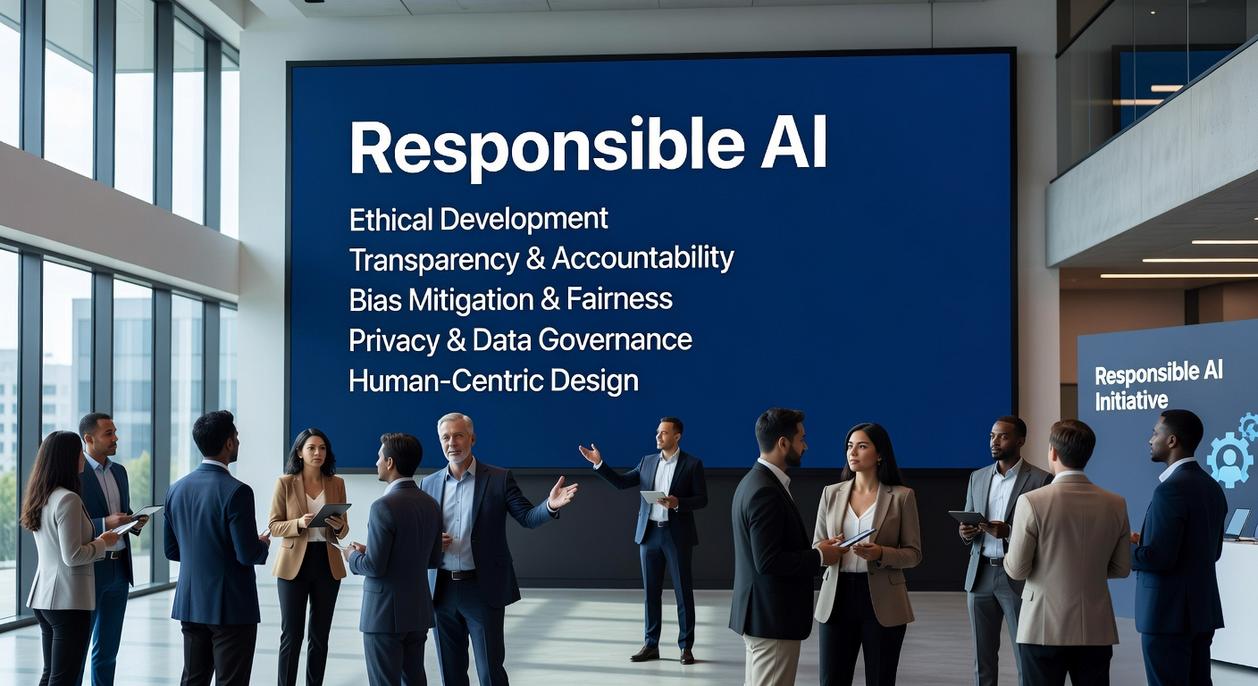
The Foundational Pillars of Responsible AI Design
Pillar 1: Fairness and Bias Mitigation
First and foremost, fairness isn’t optional—it’s structural. Algorithmic bias refers to systematic errors that produce unfair outcomes, often disadvantaging certain groups. Bias can stem from skewed data (historical hiring data favoring one gender), flawed model design, or even human labeling decisions. For example, Amazon famously scrapped a recruiting tool that penalized resumes containing the word “women’s” because it learned from male-dominated data (Reuters, 2018). In my view, that wasn’t a tech failure alone—it was a process failure. Tools like IBM’s AI Fairness 360 and techniques such as re-sampling, re-weighting, and bias audits help mitigate these risks.
Pillar 2: Transparency and Explainability (XAI)
Now, let’s talk about the “black box” problem. A black box model produces outputs without revealing how decisions are made, while transparent models allow insight into their reasoning. I strongly believe explainability isn’t a luxury—it’s a debugging tool and a trust builder. Methods like SHAP (SHapley Additive exPlanations) and LIME (Local Interpretable Model-agnostic Explanations) clarify feature influence. Without them, accountability becomes guesswork (and guesswork doesn’t scale).
Pillar 3: Accountability and Governance
Equally important, someone must own AI outcomes. Internal review boards, ethical charters, and documentation like model cards (Mitchell et al., 2019) formalize responsibility. Clear governance transforms ethical ai development from slogan to system.
Pillar 4: Privacy and Security
Finally, Privacy by Design embeds safeguards from the start. Techniques like data anonymization, federated learning, and strong encryption protect users while reducing breach risks. Frankly, if privacy is an afterthought, trust evaporates.
From Blueprint to Build: Integrating Ethics into the AI Development Lifecycle
Phase 1: Problem Formulation & Data Collection
To begin with, ethical considerations should shape the problem itself—not just the solution. If you define success narrowly (say, maximizing clicks), you may unintentionally encourage harmful outcomes. Ethical ai development starts by asking: Who benefits? Who might be harmed?
Equally important is responsible data sourcing. This means informed consent (clear permission from individuals to use their data), lawful collection, and representativeness across demographics. For example, facial recognition systems trained primarily on lighter-skinned faces have shown higher error rates for darker-skinned individuals (Buolamwini & Gebru, 2018). Still, defining “representative enough” is debated, and there’s no universal threshold. That uncertainty makes early diligence essential.
Phase 2: Model Development & Training
Next comes training, where bias audits should run alongside performance evaluations. A bias audit systematically checks whether predictions differ unfairly across groups. However, here’s the tension: improving fairness can sometimes reduce raw accuracy. Some argue accuracy should always win—after all, isn’t precision the point?
Not necessarily. In high-stakes systems like lending or hiring, small accuracy gains may not justify systemic inequities. One solution involves setting fairness constraints—mathematical limits during optimization that restrict disparities between groups. Pro tip: document these trade-offs transparently so stakeholders understand why certain metrics were prioritized.
Phase 3: Testing & Validation
Accuracy alone is insufficient. Testing should expand to robustness (performance under unusual inputs), security vulnerabilities, and subgroup analysis. For instance, systems powering computer vision applications transforming healthcare must perform reliably across age groups and imaging conditions. Yet even comprehensive validation can miss edge cases (software has a way of surprising us).
Phase 4: Deployment & Implementation
Then comes deployment. Phased rollouts and A/B testing can reveal unintended ethical impacts before full release. Additionally, users deserve clear explanations—plain-language summaries of how decisions are made—and meaningful controls to opt out or adjust features.
Phase 5: Ongoing Monitoring & Maintenance
Finally, ethics is not a one-time checklist. Models experience model drift—performance degradation as real-world data changes. Continuous monitoring, subgroup re-evaluation, and visible feedback channels allow users to report harms. Admittedly, we don’t always know how biases will evolve. That’s precisely why vigilance, iteration, and humility must remain built into the system.
Navigating the Gray Areas: Real-World Ethical Dilemmas and Solutions
Scenario 1: The Hiring Algorithm
Imagine an AI resume screener as a metal detector at the beach. It’s supposed to find treasure, but if calibrated poorly, it ignores gold buried in unusual shapes. When trained on historical hiring data, algorithms may penalize candidates from non-traditional backgrounds because the “treasure map” reflects past biases (Barocas & Selbst, 2016). Critics argue automation removes human prejudice. Yet bias in, bias out remains REAL. Solutions include adversarial debiasing—where models are trained to reduce discriminatory signals—and human-in-the-loop review, adding judgment where nuance matters. Pro tip: regularly audit model outcomes, not just inputs.
Scenario 2: The Predictive Policing Model
Using historical crime data to predict hotspots is like navigating with an old map that exaggerates certain neighborhoods. If past policing was uneven, predictions amplify it (Lum & Isaac, 2016). Supporters say data improves efficiency. But efficiency without fairness erodes trust. Alternative signals—community surveys, environmental design data—and community-led oversight boards can rebalance the compass.
Scenario 3: The Personalized Content Feed
A content feed is a buffet curated by a chef who learns your tastes. Helpful, yes—but too tailored, and you forget other flavors exist. Design choices like transparent recommendation labels, adjustable algorithms, and diversity nudges promote user agency. That’s the heart of ethical ai development.
Ethical AI is not a feature you bolt on at launch; it is the product of intentional design and a disciplined, end-to-end process. Back in 2023, many teams paused deployments after realizing late-stage bias fixes were too little, too late. That ambiguity around “doing AI ethically” can feel paralyzing (where do you even start?). The answer is a lifecycle framework that turns values into repeatable actions—from data sourcing to monitoring. Start small but start now. In your next sprint, run a pre-development ethical risk assessment. One structured step today can anchor truly human-centered systems tomorrow. Commit to ethical ai development.
Turn Innovation Into Intelligent Action
You set out to find practical innovation alerts, real-world AI applications, and smarter ways to integrate advanced tech into your workflow. Now you have a clearer path forward.
The real challenge isn’t finding ideas — it’s cutting through noise, avoiding wasted experiments, and implementing solutions that actually work. Without the right direction, promising tech becomes expensive clutter.
That’s why focusing on scalable systems, seamless device integration, and ethical ai development matters. When innovation is applied strategically, it drives measurable efficiency, sharper decision-making, and long-term competitive advantage.
Now it’s your move. Start identifying one high-impact area where AI or automation can eliminate friction today. Test, refine, and scale. If you want proven innovation alerts, studio-grade tech solutions, and actionable AI concepts trusted by forward-thinking builders, plug into the latest insights now and put intelligent systems to work immediately.