
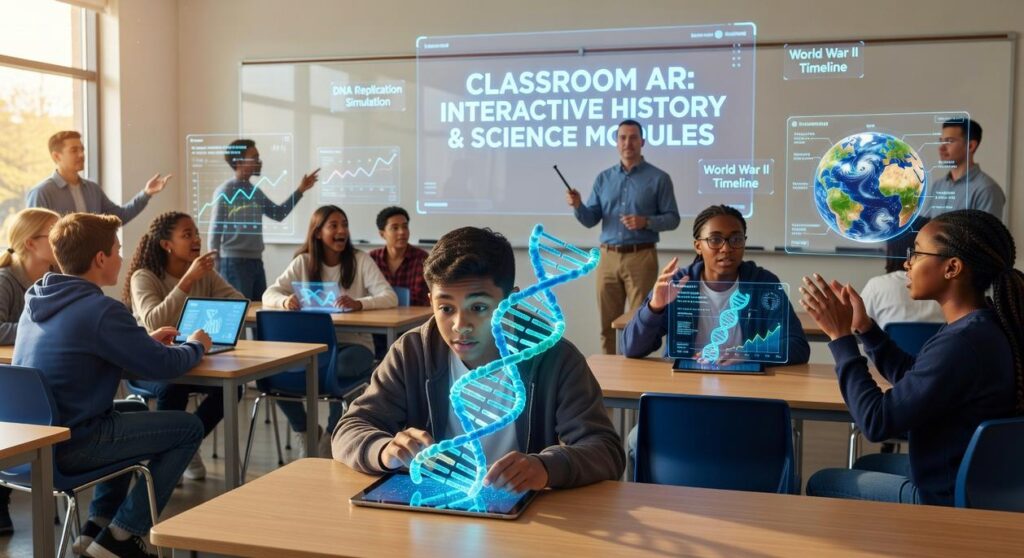
Classrooms are changing faster than ever, and augmented reality in education is at the center of that transformation. If you’re here, you’re likely looking to understand how this technology actually works in real learning environments—and whether it delivers measurable results beyond the hype. This article breaks down what augmented reality looks like in practice, how it enhances student engagement and retention, and where it fits within modern digital learning strategies.
We go beyond surface-level trends by examining real-world applications, current research findings, and tested implementation models used in schools and training programs. Insights are grounded in documented case studies, emerging tech analysis, and expert-backed data on learning outcomes.
By the end, you’ll have a clear, practical understanding of how augmented reality is reshaping instruction, what tools are leading the shift, and how to evaluate its impact in your own educational setting.
Imagine students circling a 3D human heart hovering above their desks—rotating it, enlarging chambers, stepping inside arteries. That’s a far cry from a flat textbook diagram. Traditional classrooms struggle with disengagement and abstract concepts students can’t easily visualize. augmented reality in education turns everyday tablets and phones into immersive, interactive labs, boosting retention and curiosity.
This guide delivers subject-specific ideas, classroom-ready tools, and a clear roadmap for integration, so you can increase participation, deepen understanding, and future-proof lessons. The payoff? Higher engagement, stronger outcomes, and students who actually want to explore. That’s measurable impact you can see immediately in class.
From Abstract to Tangible: The Core Educational Benefits of AR
First, AR boosts comprehension and retention by transforming abstract ideas into interactive 3D experiences. Instead of staring at a flat diagram of a cell, students can walk around a beating virtual heart or enlarge a DNA strand (which suddenly feels less like alphabet soup and more like engineering). Research published in Computers & Education found that students using AR tools showed significantly higher knowledge retention compared to traditional textbook-based learning. In other words, when learners manipulate concepts, they remember them.
Equally important, AR increases engagement and motivation. Gamified overlays and exploratory simulations turn passive listening into active discovery. A 2022 PwC study reported that immersive learners were up to four times more focused than classroom peers. That level of attention is hard to ignore.
Moreover, augmented reality in education caters to diverse learning styles. Visual learners see layered models, auditory learners hear guided explanations, and kinesthetic learners interact physically with content. It’s a multi-sensory environment where no one is stuck learning in just one mode.
Finally, AR enables safe, cost-effective exploration. Students can simulate chemical reactions or virtual dissections repeatedly without risk or resource waste—practical, scalable, and refreshingly drama-free.
Practical AR in Action: Subject-Specific Classroom Applications
Augmented reality is no longer a futuristic extra; research from PwC shows learners using immersive technologies can be up to four times more focused than in traditional settings (PwC, 2020). That focus translates directly into subject mastery when tools are applied with intention.
Science
Imagine projecting the solar system across a gym floor, where students physically walk from Mercury to Neptune to understand scale (Pluto fans, we see you). Studies published in Computers & Education found AR-based science lessons significantly improved knowledge retention compared to textbook-only instruction. Virtual frog dissections also reduce costs and ethical concerns while preserving anatomical accuracy. Earth science becomes tactile as students rotate layered 3D models of the planet on their desks.
History & Social Studies
Instead of flat photos, students can explore reconstructions of the Colosseum or ancient Egyptian tombs. A 2022 EdTech review reported increased engagement and recall when learners interacted with spatial historical simulations. It’s the difference between reading about Rome and virtually standing inside it.
Mathematics
Abstract concepts become concrete when students manipulate 3D geometric shapes to test volume and surface area formulas. Complex graphs can float in interactive space, helping visual learners connect equations to outcomes.
Language Arts & Reading
Characters can “step” into the classroom to narrate scenes, reinforcing comprehension through multimodal storytelling. Interactive word-building games turn vocabulary practice into active exploration.
Key academic benefits include:
- Improved spatial reasoning
- Higher engagement levels
- Better long-term retention
- Safe, repeatable simulations
When thoughtfully implemented, augmented reality in education bridges imagination and evidence-based learning outcomes.
Choosing Your Tools: A Guide to Classroom-Ready AR Apps and Devices
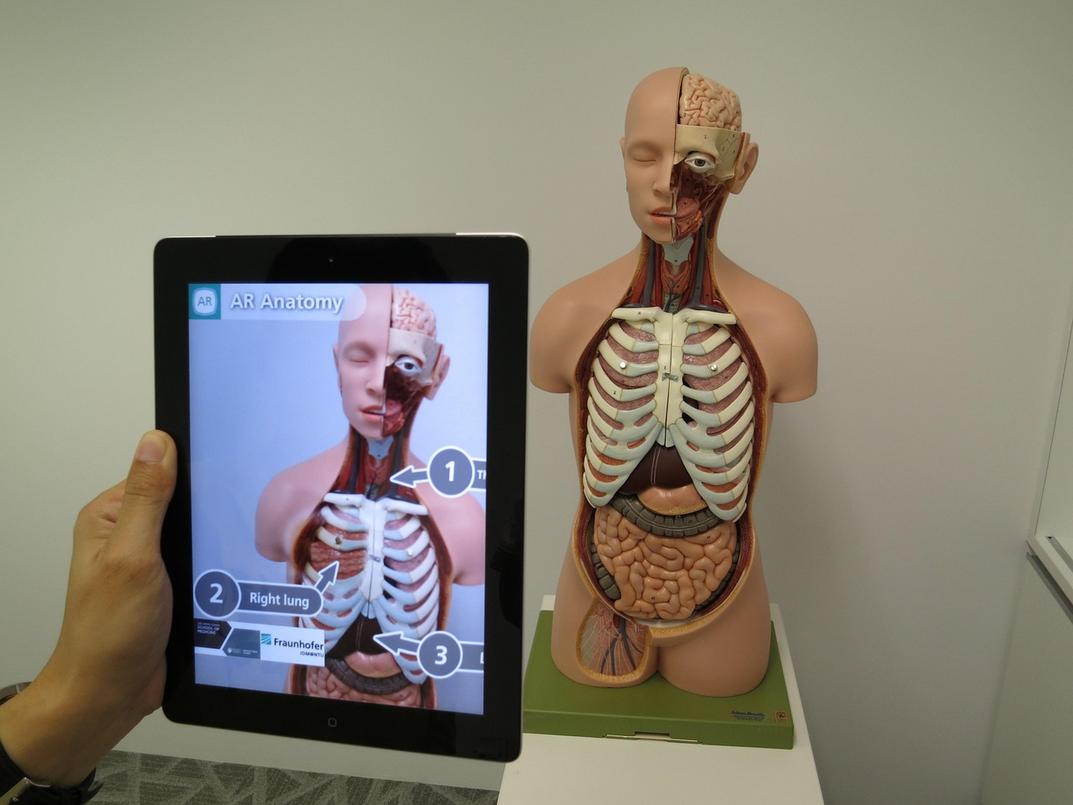
Let’s start with a myth: you need expensive headsets to use augmented reality in education. You don’t. Most modern smartphones and tablets already support AR through Apple’s ARKit (iOS) and Google’s ARCore (Android). These are software frameworks—tools that allow apps to layer digital objects onto the real world using your device’s camera. If your school uses devices from the last five years, you’re likely ready to go. (Yes, really.)
Some argue dedicated AR hardware creates a “more immersive” experience. That can be true—but for most classrooms, cost and complexity outweigh marginal gains. Accessibility often beats flash.
Top Educational AR Apps
- JigSpace: Interactive 3D models for science and engineering concepts. Think of it as a virtual lab assistant.
- Google Arts & Culture: Museum tours and cultural artifacts in your classroom.
- Merge Cube: A handheld foam cube that displays manipulable 3D objects—great for tactile learners.
Content Creation Platforms
Tools like CoSpaces Edu and Adobe Aero let students build simple AR scenes. Creating—not just consuming—deepens retention (studies show active learning improves outcomes; Freeman et al., 2014).
Prediction: Within five years, AR authoring tools will be as common as slide decks.
Pro tip: Start small—pilot one lesson before scaling.
For broader tech integration ideas, explore 5 practical applications of internet of things in smart cities.
Overcoming the Hurdles: Integrating AR Smoothly and Affordably
Bringing augmented reality in education into classrooms doesn’t require a one-to-one device rollout. According to a 2023 EdTech survey by CDW, over 60% of schools report limited device access—yet blended station models still improved engagement scores. Try:
- Small-group AR stations rotating every 10 minutes
- Whole-class projection demos using one tablet and a screen
- Peer-led exploration, where one student navigates while others guide (surprisingly effective for collaboration)
Worried about disruption? Start with short, 10-minute integrations tied directly to lesson objectives. A 2022 study in Computers & Education found brief AR activities increased knowledge retention by 18% compared to lecture alone.
Finding quality apps is critical. Look for:
- Curriculum alignment
- Credible content sources
- Clear learning outcomes over flashy effects
(Pro tip: If the app feels like a game with no assessment component, it probably is.) Quality over novelty wins every time.
Last year, I watched a room full of students glaze over as I clicked through yet another slide deck. In a 3D world, we were stuck in flatland. Textbooks and static screens made complex ideas feel distant and abstract. However, once I introduced augmented reality in education, everything shifted. Suddenly, cells hovered above desks and historical landmarks rose from worksheets. Students leaned in, asked questions, and remembered more. It felt a bit like stepping into a sci-fi classroom, minus the flying cars. So, start small. Download one app, try one pre-made lesson, and observe the difference. Then build it today.
You came here to understand how augmented reality in education is reshaping the learning experience—and now you can clearly see its impact. From immersive simulations to interactive 3D models and real-time collaboration, the tools are no longer futuristic concepts. They are practical solutions to one of education’s biggest pain points: disengaged learners and outdated teaching methods.
The challenge has always been keeping students focused, inspired, and able to grasp complex ideas quickly. Traditional instruction alone often falls short. Integrating AR-driven experiences bridges that gap by turning passive lessons into active discovery.
Take the Next Step Toward Smarter Learning
If you’re ready to eliminate disengagement and bring interactive, studio-grade tech solutions into your classroom or platform, now is the time to act. Explore proven AR concepts, AI-powered integrations, and device-ready implementation strategies that are already transforming learning environments. Join thousands of forward-thinking educators and innovators leveraging next-gen tech solutions to stay ahead. Start integrating immersive tools today and turn every lesson into an experience students won’t forget.

 Oscariono Ortega writes the kind of innovation alerts content that people actually send to each other. Not because it's flashy or controversial, but because it's the sort of thing where you read it and immediately think of three people who need to see it. Oscariono has a talent for identifying the questions that a lot of people have but haven't quite figured out how to articulate yet — and then answering them properly.
They covers a lot of ground: Innovation Alerts, Expert Breakdowns, Device Integration Hacks, and plenty of adjacent territory that doesn't always get treated with the same seriousness. The consistency across all of it is a certain kind of respect for the reader. Oscariono doesn't assume people are stupid, and they doesn't assume they know everything either. They writes for someone who is genuinely trying to figure something out — because that's usually who's actually reading. That assumption shapes everything from how they structures an explanation to how much background they includes before getting to the point.
Beyond the practical stuff, there's something in Oscariono's writing that reflects a real investment in the subject — not performed enthusiasm, but the kind of sustained interest that produces insight over time. They has been paying attention to innovation alerts long enough that they notices things a more casual observer would miss. That depth shows up in the work in ways that are hard to fake.
Oscariono Ortega writes the kind of innovation alerts content that people actually send to each other. Not because it's flashy or controversial, but because it's the sort of thing where you read it and immediately think of three people who need to see it. Oscariono has a talent for identifying the questions that a lot of people have but haven't quite figured out how to articulate yet — and then answering them properly.
They covers a lot of ground: Innovation Alerts, Expert Breakdowns, Device Integration Hacks, and plenty of adjacent territory that doesn't always get treated with the same seriousness. The consistency across all of it is a certain kind of respect for the reader. Oscariono doesn't assume people are stupid, and they doesn't assume they know everything either. They writes for someone who is genuinely trying to figure something out — because that's usually who's actually reading. That assumption shapes everything from how they structures an explanation to how much background they includes before getting to the point.
Beyond the practical stuff, there's something in Oscariono's writing that reflects a real investment in the subject — not performed enthusiasm, but the kind of sustained interest that produces insight over time. They has been paying attention to innovation alerts long enough that they notices things a more casual observer would miss. That depth shows up in the work in ways that are hard to fake.